Multitudes of Means to Curate and Categorize Knowledge Among Students and Educators Alike
Content management and curation are exceptionally important as educators as the ability to effectively manage and curate content can aid immensely in cataloguing media to use in the classroom and employing various forms of content to it in an efficient manner.
One tool I personally have used to create helpful graphs in order to connect useful information or content is Obsidian. Obsidian allows you to take notes and link them to one another through specific tags. These notes show up on a bubble graph type of image for users to examine and understand how their notes connect with one another. I used this tool last semester to create a graph surrounding queer athletes, the sports they compete in and their achievements at the international level.
This was the image my graph and its connections created:
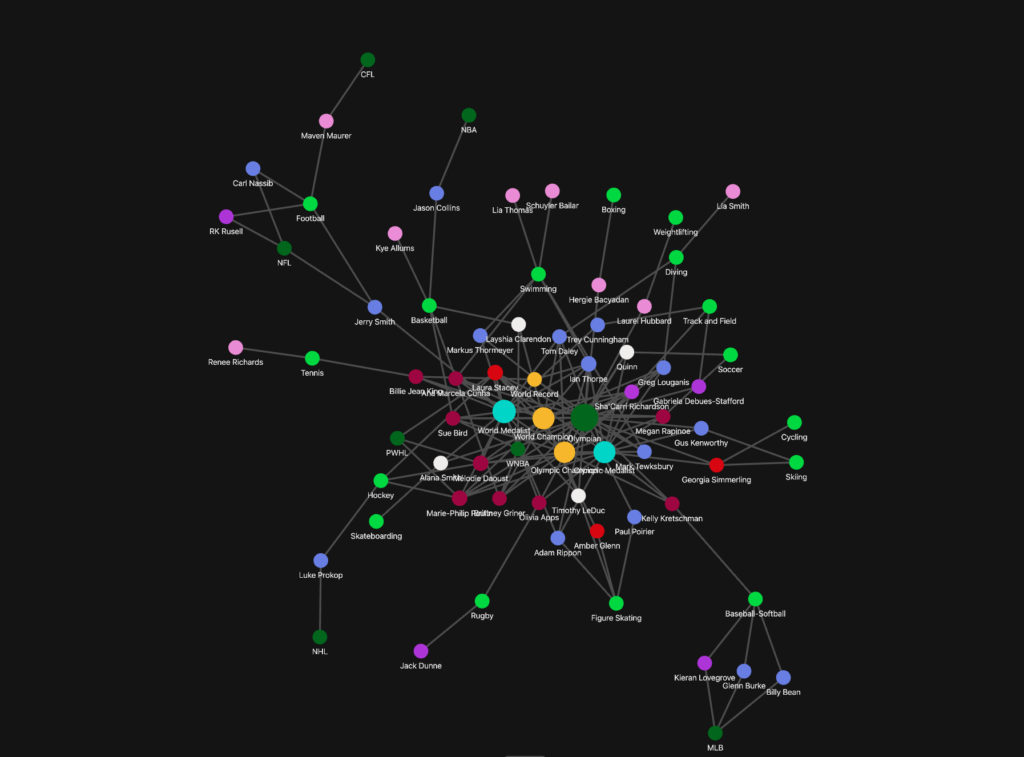
In this graph, each colour corresponds to a specific 2SLGBTQ+ identity, sport, or achievement. This image demonstrates how Obsidian can be used as a visual organizer for notes, concepts, ideas, topics, and even content for both students and educators if it is used in an applicable setting. That being said, this tool may not be the most effective for some learners as it can appear somewhat cluttered when there are too many connections. Additionally less visually inclined learners may wish to organize their notes in different ways that adhere to their learning style instead of by plotting their notes on a graph-like image the way Obsidian does.
As an educator, another tool I have used to catalogue content to use in the future in my courses is the website Padlet. On Padlet as an inquiry project for a different course, I have built a database of films that can be used in teaching many subjects including Social Studies, English, French, Physical Education, Math, Sciences, and the Arts.
This resource can be viewed through this link
The resource clarifies directors, run time, themes, and subject area for all films. Each film is linked to its IMDb page as well where those using the resource can find ratings, reviews, content warnings, and various other resources surrounding the films. This database is collaborative for any educators who it has been shared with as well as they are able to leave their thoughts on each film through a start rating out of 5 and comments. While this tool has helped me create a useful database for myself and other educators to catalogue film content for various courses, it is somewhat of a hassle to add new films to the database as they must all be inputed to the database manually. Additionally, while IMDb offers locations to watch these films, they are not directly linked so that they are watchable through this tool which means educators still must search for a way to watch these films if they wish to use them in their classes.

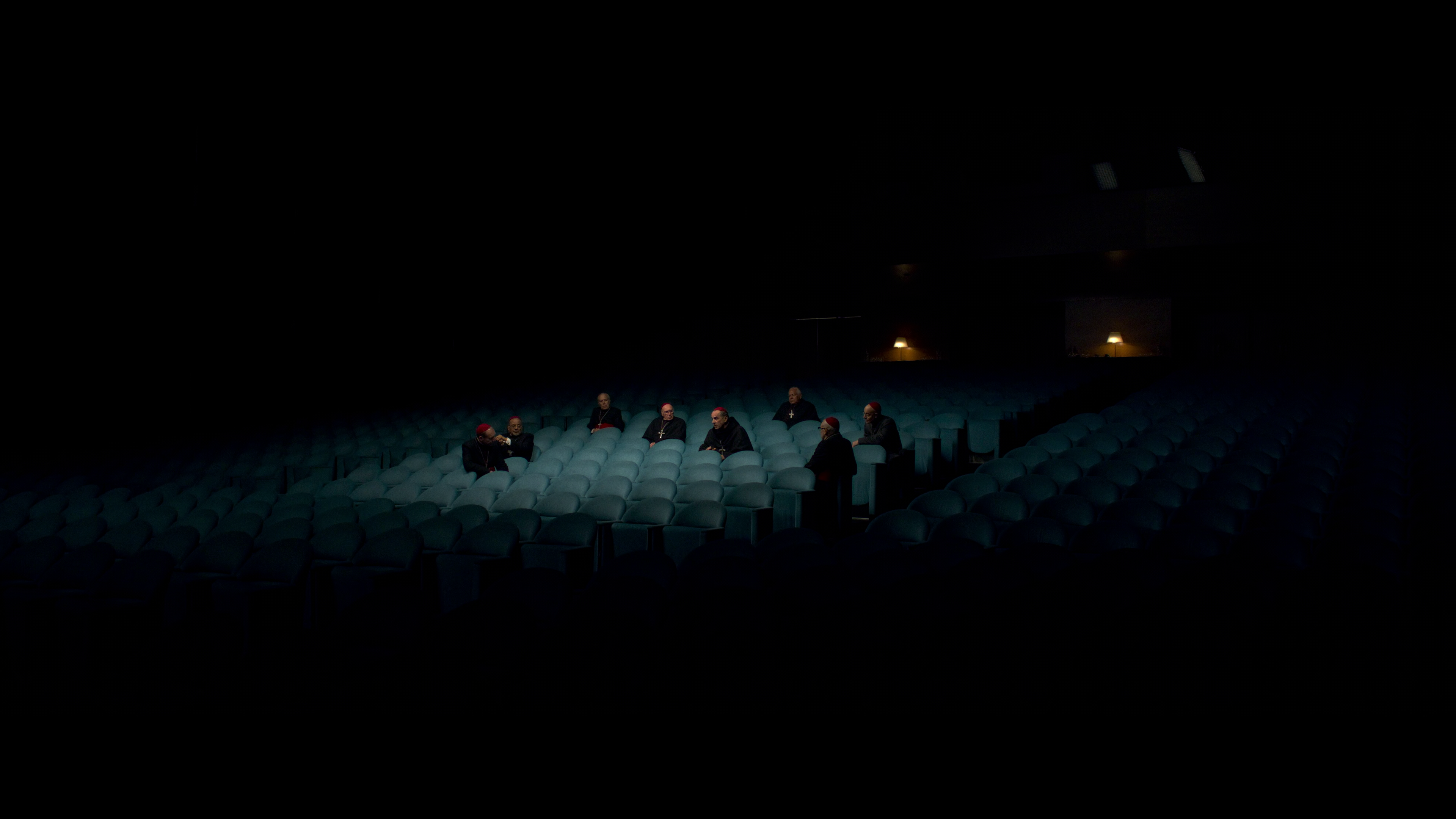
Film for Thought: Curating content can at times be a very selective and arduous process as an educator. This work must be thoughtful and is very important to ensuring material is being delivered to students in an effective manner that supports their learning. A film that I believe exemplifies this decision making process, albeit on a much larger scale is Edward Berger’s Conclave (2024).
While content curation and organization may not necessarily be as world altering as selecting a new pope, I think this film reflects the methodical approach that must be taken to content curation as it is a process that is rarely linear.